When Work Follows You Home: A Guide for High-Stress Professionals
Quick Answer:
High-stress professionals like police officers, trauma therapists, human trafficking investigators, and content moderators face real psychological risks when they bring tough work home. Setting up a dedicated workspace, sticking to timelimits, and using intentional ways to decompress can help protect both your job performance and your personal life...and your sanity.
A certain quiet fills a house in the evening. You might hear the hum of the refrigerator, a neighbor’s dog, or the TV in another room. For most people, this feels safe and comforting.
But then you open your laptop and find yourself reviewing evidence from a child sexual abuse case, even as the ice maker drops cubes into a glass nearby.
I know that moment. I've lived it.
In my work with psychosexual evaluations and forensic psychology, I’ve sat in my own recliner, feeling comfortable and relaxed, while reviewing documents and footage that no one should ever have to see—especially at home. I remember thinking it was manageable.But when I got up for ice and heard the details of a child’s abuse coming from my laptop in my living room, I realized something no manual had prepared me for: the place where you relax isn’t always the right place to work.
This isn’t just a theoretical problem. It’s real and affects many professionals. Police officers review body cam footage at the kitchen table. Human trafficking investigators process evidence in spare bedrooms. Trauma therapists write session notes between family dinner and bedtime. Content moderators at international nonprofits, people I’ve worked with, often review violent or sexual material on home computers, sometimes in homes where children sleep nearby.
Remote work has brought more flexibility, but for high-stress professionals, it also brings hidden costs. This post is about those costs and what you can do to manage them.
Why Home and High-Stakes Work Are a Difficult Combination
The idea of working from home sounds ideal. No commute. Comfortable clothes. Your own coffee. For many fields, remote work is a genuine quality-of-life upgrade.
But the brain doesn’t handle trauma, violence, or ongoing high-stress content the same way it handles a quarterly report. Research on vicarious trauma and secondary traumatic stress, especially in fields like social work, law enforcement, and emergency medicine,shows that repeated exposure to disturbing material slowly changes how professionals see safety, trust, and the world. When your home, a place your brain connects with rest and recovery, also becomes a workspace for this kind of content, it loses its senseof safety.
Think of it this way: your home is your safe place. If you let high-stress work spill into it without clear boundaries, you slowly break down the walls that keep it secure.
This isn’t a sign of weakness. It’s how the brain works. Often, the professionals most at risk are the least likely to ask for help.
Who Is Most Vulnerable to This Problem?
High-stress professionals across industries face this challenge daily:
- Law enforcement officers reviewing body camera footage, crime scene images, and case files from home
- Forensic psychologists and therapists completing evaluations involving sexual abuse, violent crime, or complex trauma histories
- Human trafficking investigators and nonprofit workers processing exploitative content as part of their casework
- Content moderators employed by technology companies or international organizations, tasked with reviewing flagged material.
- Military personnel and veterans continuing high-stakes operational or administrative work in residential settings.
- Emergency physicians and nurses completing documentation and reviewing difficult cases outside clinical environments.
All these professionals share one reality: the work itself doesn’t get easier just because you’re at home. The content stays the same, whether you’re in an office or sitting in your recliner.
Risk Assessment Has Limited Scope
- The evaluator assesses and reports on what the evidence and tools indicate.
- They do not treat or produce a treatment plan.
- A referral to a knowledgeable treatment provider follows the evaluation.
- This separation keeps the findings objective and conflict-free.
The Five Rules for Bringing High-Stakes Work Home
1. Create a Dedicated Workspace—And Mean It
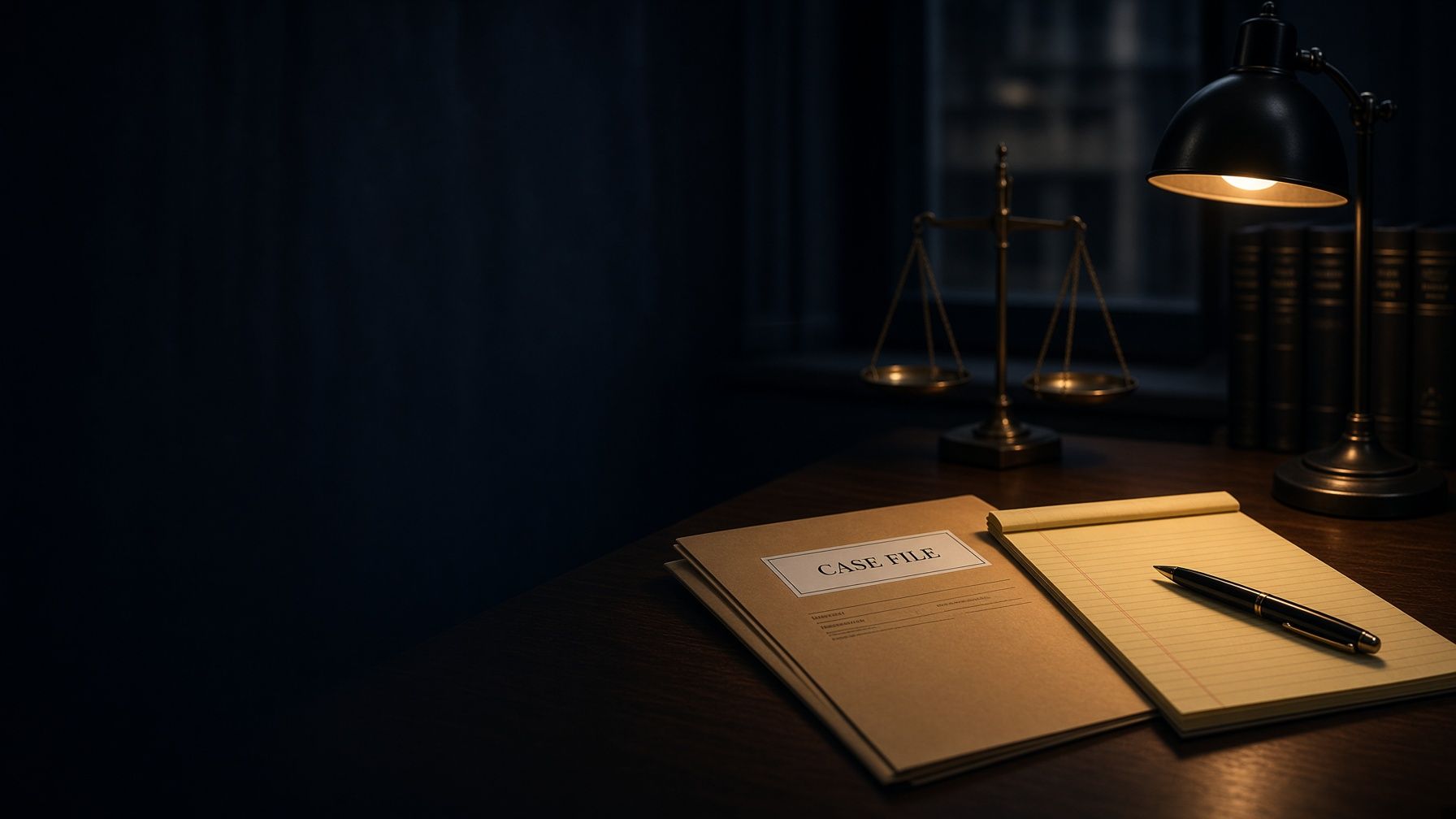
A dedicated workspace is not just about productivity. For professionals working with disturbing or high-stress content, it's a psychological necessity. Designate a specific room or area—a home office, a study, even a sectioned-off corner—that serves exclusivelyas your work environment. When you're in that space, you're working. When you leave it, the work stays there.
The physical separation communicates something important to the brain: this is where I process hard things. Outside of that space, your nervous system can begin to recover. Without that demarcation, your entire home becomes a workspace—and you lose theone environment that should be off-limits to professional stress.
2. Protect Your Home, Not Just Yourself
Most conversations about content limits focus on protecting the professional from exposure. That's legitimate, but it misses something critical. The more urgent issue is protecting your home environment as a sanctuary.
Your haven—the place where you decompress, relate to your family, and recover from the demands of your field—needs to stay intact. When the content you review professionally begins seeping into the spaces where you live, rest, and connect, you're eroding somethingthat cannot easily be rebuilt. Limit what you engage with at home, not because you can't handle it technically, but because your home needs to remain your home.
This is especially important for professionals with families. Children are perceptive. Partners absorb stress. Your home environment shifts in ways both visible and invisible when high-stakes professional material regularly occupies it.
3. Set a Hard Time Limit—And Enforce It
There's no such thing as "just a few more minutes" when the content is traumatic. Cognitive fatigue compounds exposure, and the longer you sit with disturbing material without a break, the more your brain's processing capacity degrades.
Set a specific time limit before you begin a session—thirty minutes, an hour at most—and commit to stopping when that time ends. Use a timer if you need to. The discipline here isn't about being soft; it's about being strategic. Professionals who manage sustainedhigh-stress exposure successfully understand that pacing is a performance tool, not a concession.
4. Bedrooms and Family Spaces Are Non-Negotiable
This one is absolute: under no circumstances should high-stress, high-impact professional work occur in your bedroom or primary family living areas.
The bedroom is where your body learns to sleep. The brain builds strong associative pathways between environment and physiological state—this is why sleep hygiene recommendations almost universally advise against using your bed for anything other than sleepand intimacy. Introduce crime scene footage, trauma records, or abuse documentation into that space, and you disrupt those associations in ways that take significant time and effort to repair.
The same applies to family rooms, dining spaces, and anywhere children regularly spend time. These rooms carry emotional and psychological weight. Preserve them.
5. Process It, Then Move On—Deliberately
Here's the part that most productivity advice skips entirely, because it's uncomfortable and it doesn't have a clean checklist. After you've done the work, you need to move through it actively.
Closing the laptop is not the same as closing the mental file. The brain continues to process what it's been exposed to, often at a subconscious level, which is exactly why trauma professionals report intrusive imagery, disrupted sleep, and emotional bluntingeven outside of work hours.
So after a session—especially one involving disturbing content—do something deliberate. Go for a run. Call a friend who makes you laugh. Cook something. Lift weights. Watch something completely irrelevant. The goal is to give your brain a transitional taskthat shifts your state. You're not trying to suppress what you saw—you're creating the conditions for your nervous system to process it and move forward. Think of it as washing out your brain. The content doesn't disappear, but your relationship to it changeswhen you actively create space between exposure and the rest of your day.
What Happens When These Boundaries Aren't in Place
I've worked with enough professionals in high-stress fields to know what the absence of these boundaries looks like over time. It starts subtly—a shorter fuse at home, trouble sleeping, a flattening of emotions that used to come easily. Then it deepens: hypervigilance,difficulty connecting with family, and an increasing inability to leave the job behind, even in moments designed for rest.
This progression has a name in clinical settings—vicarious trauma, or compassion fatigue—and it doesn't discriminate by seniority, toughness, or commitment to the job. The most dedicated professionals are often the most vulnerable, precisely because their investmentin the work makes it harder to pull back.
The good news? These outcomes are preventable —not through willpower alone, but through structure, intentionality, and, when necessary, professional support.
Building Long-Term Resilience in High-Stress Careers
Protecting your home environment is a start, not a finish. Sustainable performance in high-stakes fields requires ongoing support structures that most professionals haven't been taught to build. This includes:
- Regular supervision or peer consultation with colleagues who understand your specific field
- Structured debriefs after exposure to particularly difficult material
- Confidential coaching or therapy with someone who understands high-performance fields—not to process weakness, but to maintain edge.
- Physical recovery practices including sleep hygiene, movement, and nutrition
- Clear professional identity boundaries—knowing where your role ends and where you begin
The professionals who sustain long careers in high-stress fields aren't the ones who are tougher than everyone else. They're the ones who've built better systems.
The Real Cost of Bringing the Work Home
Here's what I've come to understand after years in practice: the problem with bringing high-stress work into your home isn't that professionals can't handle it technically. Most can, for a while. The real cost is what happens to the one place that was supposedto be separate from it all.
You can rebuild a career. You can take new cases, earn new credentials, move to a different agency. What's harder to rebuild is the sense that your home is safe—that sitting in your own living room with a glass of iced water means you're off the clock, fullypresent, fully yourself.
That feeling is worth protecting. Deliberately, systematically, without compromise.
Frequently Asked Questions
Is it normal to feel fine during high-stress work and only struggle afterward?
Yes, and it's one of the most important things to understand about vicarious trauma. The body often sustains performance during exposure through adrenaline and professional focus, with emotional and neurological impact surfacing hours or days later. This delayedresponse is why post-session decompression is non-negotiable, not optional.
How do I know if I'm experiencing vicarious trauma or secondary traumatic stress?
Common indicators include intrusive thoughts about case content, difficulty sleeping, emotional numbing, increased irritability, and a growing sense that the world is more dangerous than it used to feel. If these symptoms are persistent, consulting a mentalhealth professional with experience in trauma—particularly one who specializes in high-stress professions—is the appropriate step.
What if I don't have a dedicated room to use as a home office?
Physical space matters, but you can create boundaries even in a small space. A specific desk area, a particular chair reserved only for work, or even a room divider can establish the psychological cue that separates work mode from home mode. The goal is consistency—alwaysworking in the same defined area, and never working outside of it.
Can these strategies apply to content moderators and nonprofit workers in the same way as law enforcement?
Yes. The content reviewed by human trafficking investigators, content moderators, and forensic professionals carries similar traumatic weight regardless of professional title. The field of study doesn't determine exposure risk—the nature of the content does.All professionals regularly encountering violent, sexual, or exploitative material as part of their work benefit from the same boundary structures.
When should a professional seek outside support for managing work-related exposure?
The threshold should be lower than most high-performers expect. If boundary strategies alone aren't restoring your sense of psychological safety at home, if symptoms are affecting your relationships, sleep, or professional performance, or if you notice a progressivenumbing to content that once affected you—seek support. Tailored, confidential coaching or therapy isn't a last resort. For professionals in high-stakes fields, it's a performance tool.